Render Unto Caesar, Not Unto Claude
Pope’s AI takes explained
This post originally appeared in ChinaTalk.
“In 2026, the idea of being a skeptic or being AGI-pilled is an obsolete distinction. Everybody agrees we’re in the middle of some kind of takeoff now.”
Habemus the Pope’s AI takes! To dive in, ChinaTalk’s chips analyst and resident Catholic explains what is going on below. In the second half of the newsletter, you can find the transcript of the podcast (that you should really just listen to your favorite podcast app), featuring Tim Hwang of the Institute for Christian Machine Intelligence and John-Clark Levin of Kurzweil Technologies.
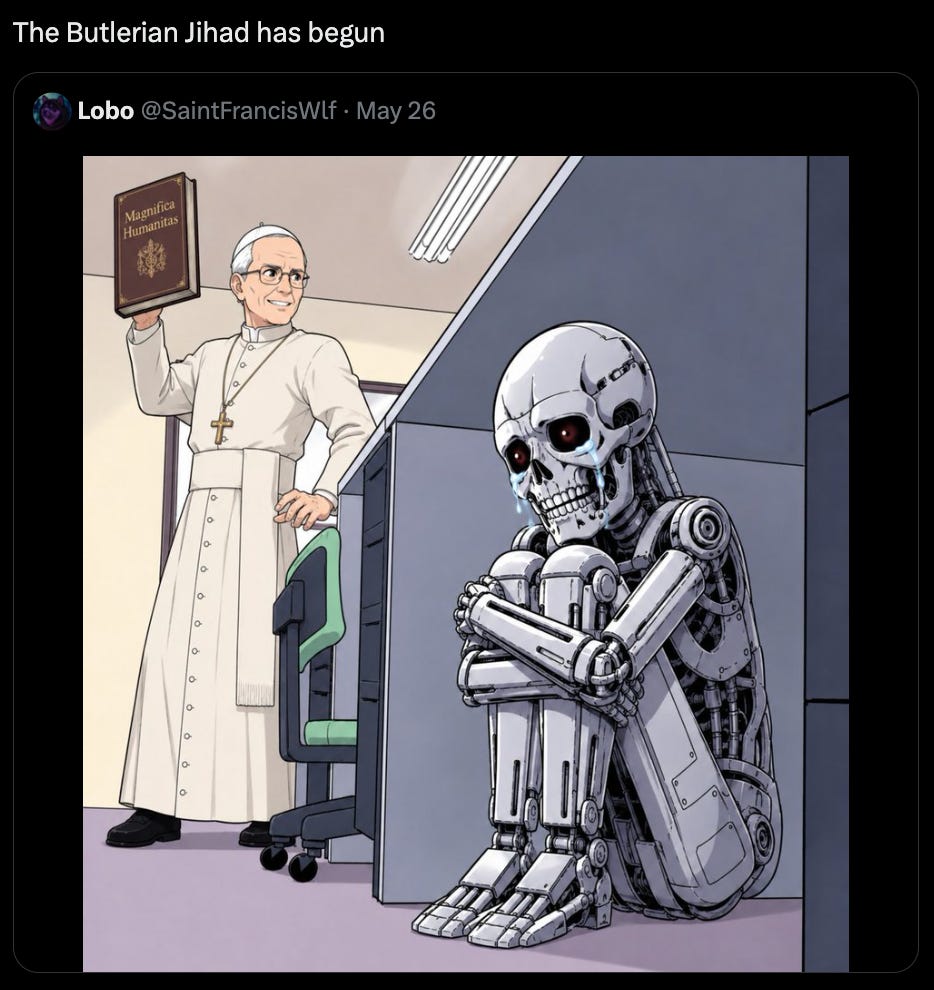
On May 25, 2026, Pope Leo XIV released the first encyclical of his pontificate, Magnifica humanitas, which discusses “safeguarding the human person in the time of artificial intelligence.”
The much-awaited encyclical was the first deliverable that addresses AI, a topic that the Church has been attempting to address since the pontificate of Pope Francis.1 The current Pope picked his name in part after his predecessor Pope Leo XIII, whose encyclical Rerum novarum addressed the effects of the Industrial Revolution. By taking his name, Pope Leo XIV indicated that he would treat the impending AI revolution with equal seriousness.
After Magnifica humanitas was released, my X feed was flooded with half-baked takes on the encyclical, with posts by everyone from Dean Ball to Butlerian jihadists. The outpouring of takes from non-Catholics indicate that, for some reason, people care about the Pope’s stance on AI. Why do they care, and why should you care?