
GitHub's plan for Agents — Kyle Daigle, GitHub
GitHub pioneered the modern AI coding era with Copilot, and the resulting explosion in agentic coding has led to notable strains on the most popular developer platform in the world. Here's the plan.
This post originally appeared in Latent Space.
“I can crank up fifteen agents on Saturday while my kids are doing lacrosse.”
I’m excited to work with Microsoft once again as the presenting sponsors of the AI Engineer World’s Fair! We’ll streaming live from MS Build today for a special crossover pod with our friends at No Priors and the one and only Satya Nadella. However we did not hold back with this interview - we asked all the burning questions about uptime and Copilot that we know you have in your minds. Lets go!
For almost two decades, GitHub has been the home of software, where both open source and closed flow, through commits, pull requests, reviews, actions, etc.


This ecosystem flourished as open-source maintainers and contributors would continue shipping code for the benefit of the community. However as coding agents began to ship mass quantities of code - growing 1400% in 2026, it marked a new era that was both extremely exciting and challenging for GitHub.

While these agents help more people ship more projects, they also significantly increase the floor of how much code is shipped, how often it is shipped, how many people commit code, and basically orders of magnitude multiples in every dimension of GitHub infrastructure:
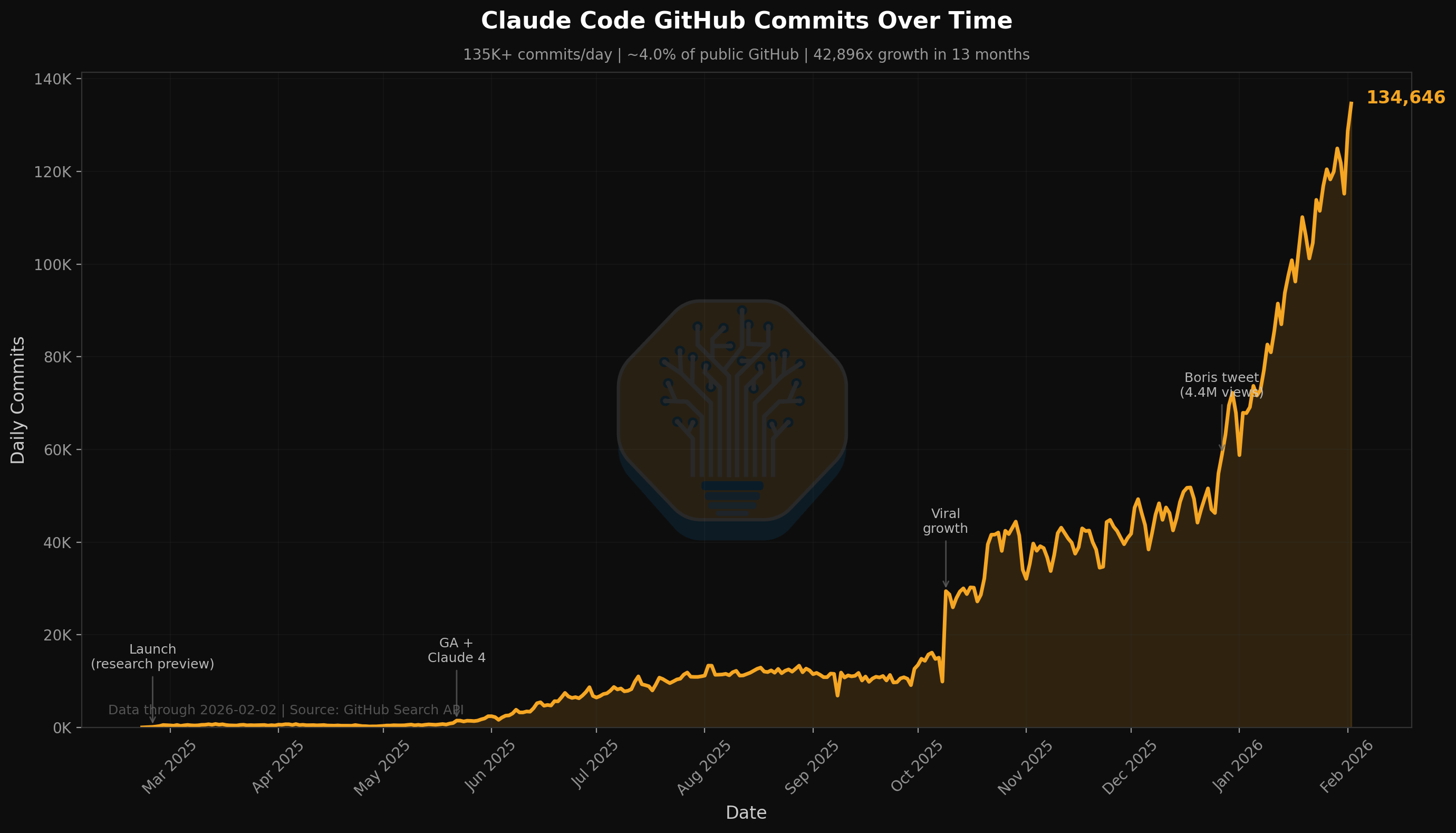
Now GitHub inevitably experiences more pressure on their infrastructure which was originally designed around human developers moving at human speed. This has resulted in a very publicly notable uptime story:


So it begs the question of whether current systems around code can absorb what AI produces. Can CI/CD keep up when every idea becomes a build? Can open source maintainers survive floods of AI-generated slop contributions? Can GitHub preserve the human social contract of software while becoming the operating layer for agents?
Which brings us to the perfect person to answer these questions: GitHub COO Kyle Daigle. In this episode, he joins swyx to unpack what happens when AI doesn’t just autocomplete code, but starts changing how companies operate, how open source works, how pull requests get reviewed, and how GitHub itself has to scale.
We go deep on GitHub’s internal AI workflows: micro-skills, WorkIQ, MCP, Slack, Teams, email, Copilot workflows, the new Copilot desktop app, CLI, cloud agents, and how Kyle uses agents to look backwards across company context before deciding what to do next. Kyle also reflects on GitHub’s history building webhooks, APIs, Actions, npm, Dependabot, and Semmle, why the AI era is breaking GitHub in new ways, how Actions became a general-purpose compute layer, and what Copilot becomes after code completion.