This post originally appeared in Latent Space.
“The downside risk is extremely high here in healthcare. It can be fatal in some cases.”
Abridge did not start as an “GPT wrapper”. It was founded in 2018, years before the Cambrian explosion of AI application layer companies. OpenAI launched ChatGPT publicly on November 30, 2022 and by then, Abridge had already spent years doing the unglamorous work of building trust for one of the highest context, most important workflows in healthcare: the conversation between a patient and a clinician.
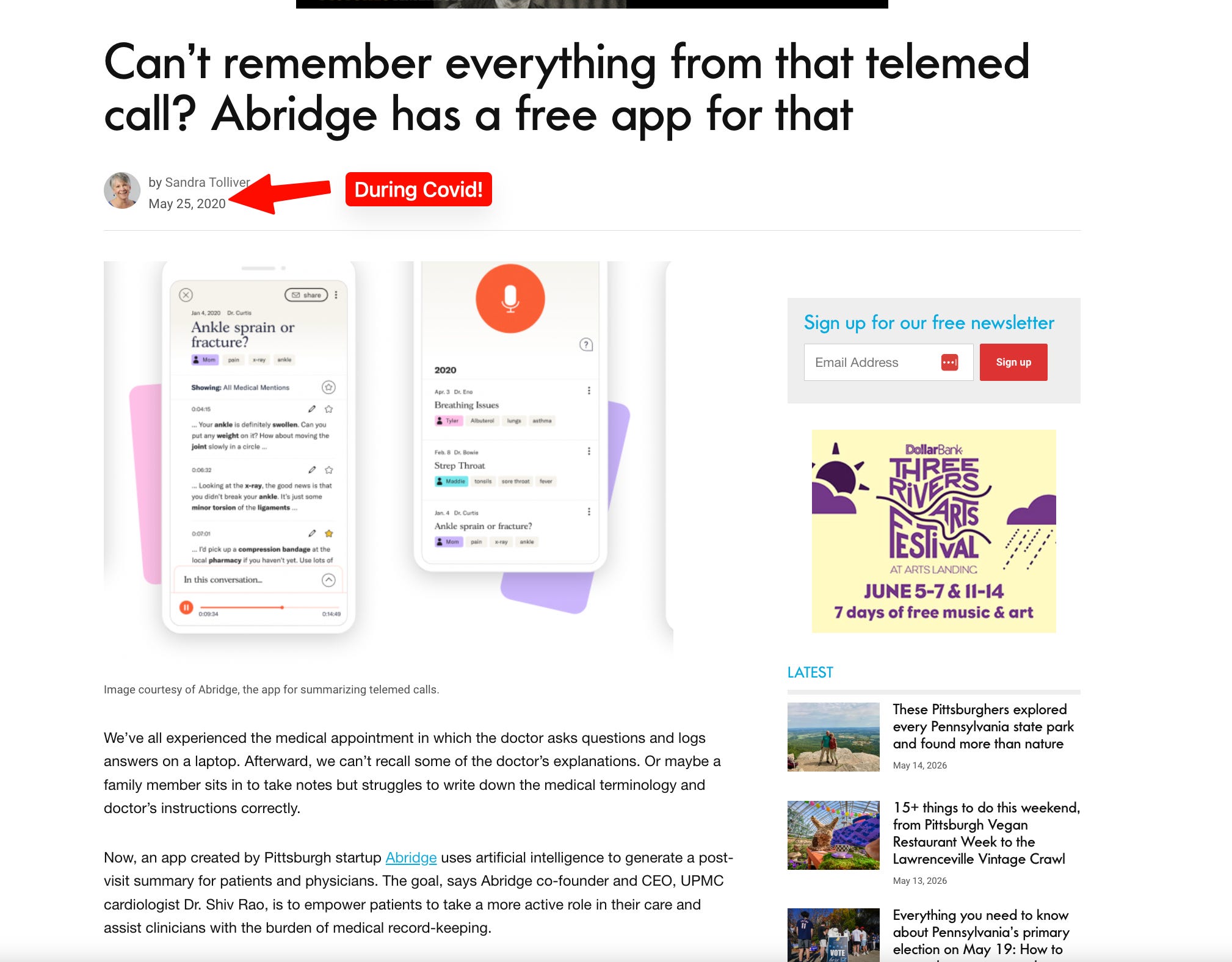
Abridge’s original wedge was clinical documentation. Listen to the visit, generate the note, reduce the clerical burden, and let clinicians spend more time with patients instead of the EHR. By focusing on how doctors actually document, how health systems actually buy, how EHR integration actually works, how clinicians verify outputs, and how missing context during a visit turns into downstream friction across billing, prior authorization, quality, and follow-up, the adoption of LLMs became a force multiplier on a workflow already optimized for sensitive context gathering.
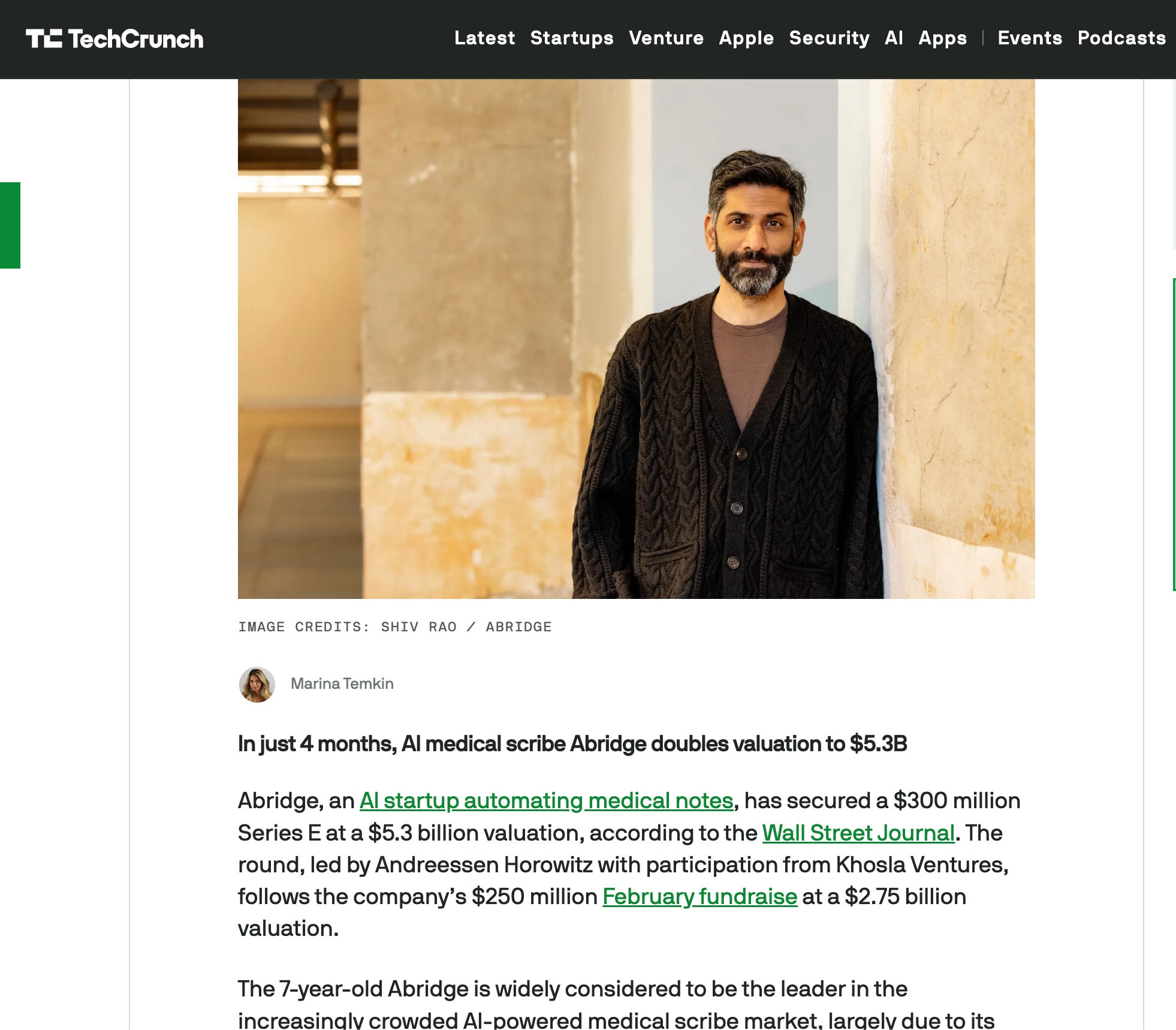
The company has scaled fast: Abridge says it is projected to support 80M+ patient-clinician conversations this year across 250 large and complex U.S. health systems, with support for 28+ languages and 50+ specialties. It raised $300M at a $5.3B valuation in June 2025, after a $250M round earlier that year.